
Swing Smoothly, Hit Powerfully
Once you’ve reached the ball, shift your focus to the strike itself. Your goal is simple: drive the racket’s sweet spot cleanly through the ball. This applies to every shot you play—groundstrokes, volleys, overheads, and half-volleys
Everyone wants to hit hard. The problem arises when “hitting hard” becomes “hitting out of control.” The moment your swing is so forceful that it throws you off balance, you’ve gone too far. Power without balance isn’t power—it’s wasted effort. The right guideline is this: swing as hard as you can while staying balanced. Balance is your built-in governor—it tells you when you’ve crossed the line between controlled force and reckless force.
Keep your mind on the hitting action—the racket meeting the ball—and notice how your body feels as you increase your swing speed. Push yourself to swing harder and pay attention to the moment when balance begins to break down. That threshold is your current maximum controlled force. The surprising part? Most players discover they can swing much harder than they originally believed, as long as their movement and balance stay intact.
So how do you reach that maximum balanced swing force? The answer isn’t in your arm—it’s in your whole body. True power comes from using your entire structure: legs anchoring, hips and core rotating, shoulders guiding, and the arm delivering. When the whole body works together, the swing becomes both smooth and explosive—fast without being wild, strong without losing control.
Tennis Swing Applying Body Structure, Not Only Arms
On groundstrokes, your arms are not the primary engine of power. They are simply the end part of the swing chain. The true source of force comes from your body leading your arms.
Think of power not as an arm swing, but as the coordinated motion of your entire hitting system—feet, legs, hips, torso, shoulders, arm, and racket working as one. When these parts move in sequence, you create a large, dynamic structure capable of generating far more force than the arm alone could ever produce.
The difference is dramatic. A swing driven only from the shoulder or elbow produces limited speed and often strains the arm. But when the legs drive upward, the hips rotate, and the torso unwinds into the shot, the racket accelerates naturally and powerfully—without extra effort.
That said, tennis is not about maximum force on every stroke. Different situations demand different tools. A full-body swing is essential for heavy groundstrokes from the baseline, but at the net, power gives way to quickness. On a fast volley, if you try to load your entire body into the stroke, the ball will be gone before your racket makes contact.
Great players know how to switch gears—using the body to unlock power when there’s time, and relying on compact, quick reactions when the rally demands speed. Power and quickness are both part of the game; the art lies in knowing when to use which.
Straighten Your Racket Arm for a Powerful Forehand
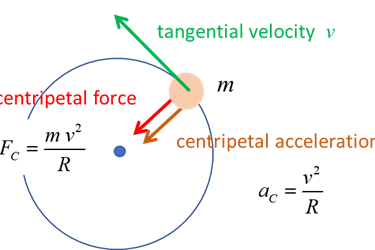
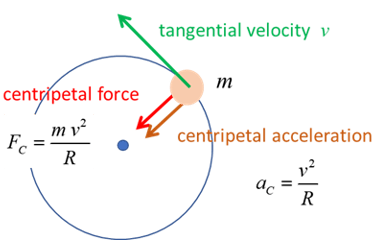
To understand how to generate more racket head speed during a tennis forehand, we can turn to Newton’s Second Law applied on circular motion:
F*R=m*V*V
This equation tells us that the centripetal force required to keep an object moving in a circular path increases with the square of its speed (V²) and decreases with the radius (R) of the circle. But you can say this way:
If you want to increase the speed (V) of the racket head for a powerful shot, you must apply a large pulling force (F) along the direction of the swing.
Also to apply a larger velocity (V), you want a longer R, which means the outside of the circle will have bigger speed.
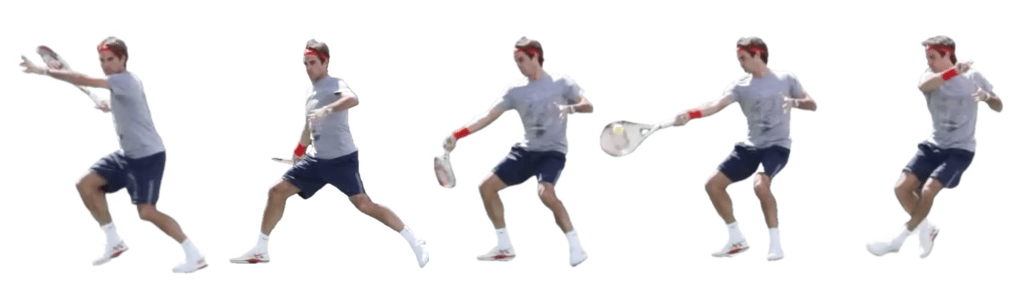
In addition, using a straight arm on the forehand can make it easier to extend and reach the ball — a technique Roger Federer famously demonstrates with his powerful forehand. By keeping the hitting arm long, you don’t have to position yourself extremely close to the ball. Instead, the extended reach allows you to make contact out in front with a longer straight arm plus racket, not only running less but also giving you both power and control without crowding your swing.
Balance and Centripetal Force
When you turn your shoulders back around the spine, your torso stores elastic force like a coiled spring. As you step forward and uncoil, that stored elastic force is released into the shot. At the same time, another crucial element of a good stroke comes into play—hitting through the ball with your whole body.
The difference between arm-only hitting and body-driven hitting is dramatic. When you’re balanced, your body can contribute fully—legs, hips, torso, and shoulders all working together to drive the racket. The force generated is much greater than what your arm alone could supply. But when you’re off balance, your body’s main job becomes keeping you upright, leaving the arm to do all the work. The result? You can get the ball over the net, but with nowhere near your true potential power.
Balance at the start and finish of the swing is the key to unlocking body power. If you can learn to swing with your body structure—timing each part to create and then release force—you’ll not only strike with more strength and stability, you’ll also gain time. Why? Because moving from a balanced position is quicker, allowing you to reach the ball earlier and prepare better for the next shot.
Balance doesn’t require special training—it requires awareness. Tennis constantly challenges your balance because of all the movement involved, but you can manage it by noticing the symmetry in your body. For example, on a forehand, as your right arm swings forward across your body, allow your right leg to shift slightly back. This creates dynamic balance between the upper and lower body, keeping the entire structure stable through the hit.
Often, just becoming conscious of this balance transforms your game. The simple awareness of how your arms and legs counterbalance each other can make your strokes more powerful, more efficient, and more consistent.
Running in to Hit
Few things in tennis feel more frustrating than sprinting forward for a short ball and then missing what looks like an easy put-away. But don’t be too hard on yourself—those shots are not as simple as they seem. Swinging the racket while your body is moving forward is very different from swinging when your weight is firmly grounded. What feels “easy” actually demands a different kind of timing and balance.
The reality is that about ninety percent of your shots are hit from a relatively stable position, not while running in. Over time, your timing becomes grooved for that situation, responding almost automatically. But when you’re on the move, the challenge is maintaining dynamic balance—making sure both legs are able to support your body weight during the hitting moment, whether you’re running or standing.
That’s why most teaching pros advise: if you’re moving forward for a ball, try to come to a stop before you swing. This doesn’t mean your forward momentum must drop to zero. It means you need to bring your body under control so that your swing is powered and stabilized through both legs at the moment of contact. By grounding your swing in balance—even briefly—you eliminate the struggle of coordinating a moving body with a moving racket, and you give yourself the stability needed to hit with firmness and authority.
How to Hit a Topspin Shot
Topspin is one of the most valuable shots in tennis because it gives you control, margin, and safety while still letting you hit aggressively. The essence of topspin is forward rotation of the ball. You create this spin by brushing the racket from low to high against the ball’s surface, making it rotate forward as it travels through the air.
Understanding the Spin.
Take a look at the picture of the tennis ball. The ball has two things happening at the same time: Velocity (forward movement): The ball is traveling toward your opponent’s side of the court; Rotation (forward spin): The ball is rotating forward, top rolling over bottom.
This combination is what makes topspin unique. The forward velocity drives the ball through the air, while the rotation creates the Magnus effect—a force that pulls the spinning ball downward into the court. That’s why a topspin shot can clear the net by a safe margin and still drop inside the baseline. The faster the rotation, the sharper the dip.
The Brushing Action.
To produce this spin, your racket doesn’t strike the ball flat. Instead, the strings brush up the back of the ball, sliding upward against the surface. Imagine your racket “grabbing” the lower part of the ball and rolling it toward the sky. This upward brushing action causes the ball to rotate forward, just like the picture shows.
If you only swing forward, the ball travels flat. If you swing upward, the ball pops too high without penetration. The key is blending both: forward velocity plus upward brushing. It’s how you create the perfect mix of depth, spin, and control.
The Role of Arm Rotation.
Arm rotation adds to the effect. As your racket brushes up, your forearm naturally pronates (rotates forward). This keeps the racket face slightly closed, which prevents the ball from floating too high. At the same time, the relaxed wrist acts like a hinge, allowing the racket head to accelerate and whip through contact.
When these elements work together, the racket doesn’t just push the ball forward—it rolls it, giving the heavy topspin shown in the diagram.
A Simple Drill.
To train this, think of “rolling” the ball over the net very high ( Double heights of the net). Visualize the picture: velocity plus forward rotation. Start slow, exaggerating the brushing motion from low to high, and focus on feeling the ball spin. Over time, you’ll naturally combine speed and spin into one smooth stroke.
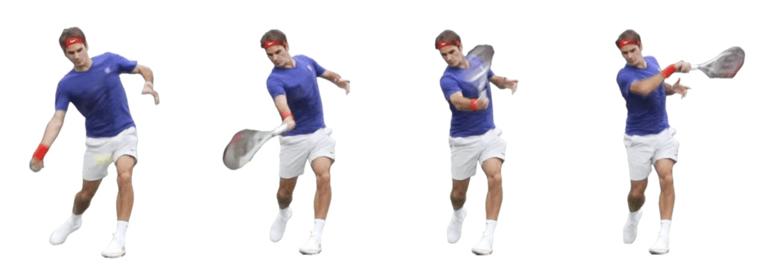
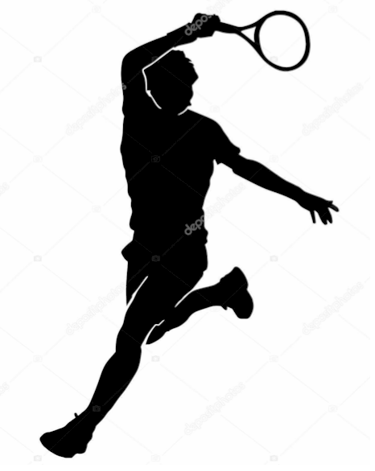
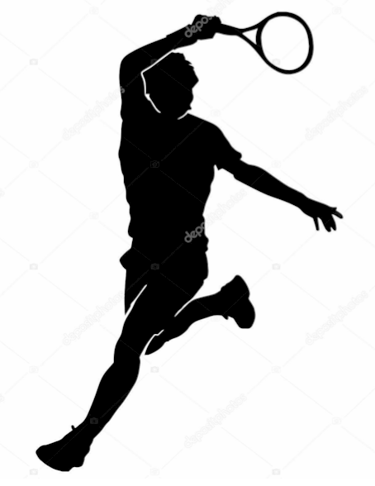
The series of pictures of Federer's stroke tells the whole story— after adding the brush hitting the ball from low to high, forward rotation will make it curve down and dip into the court. That’s the magic of topspin: control through spin, created by brushing the racket up the back of the ball with the natural rotation of the arm.